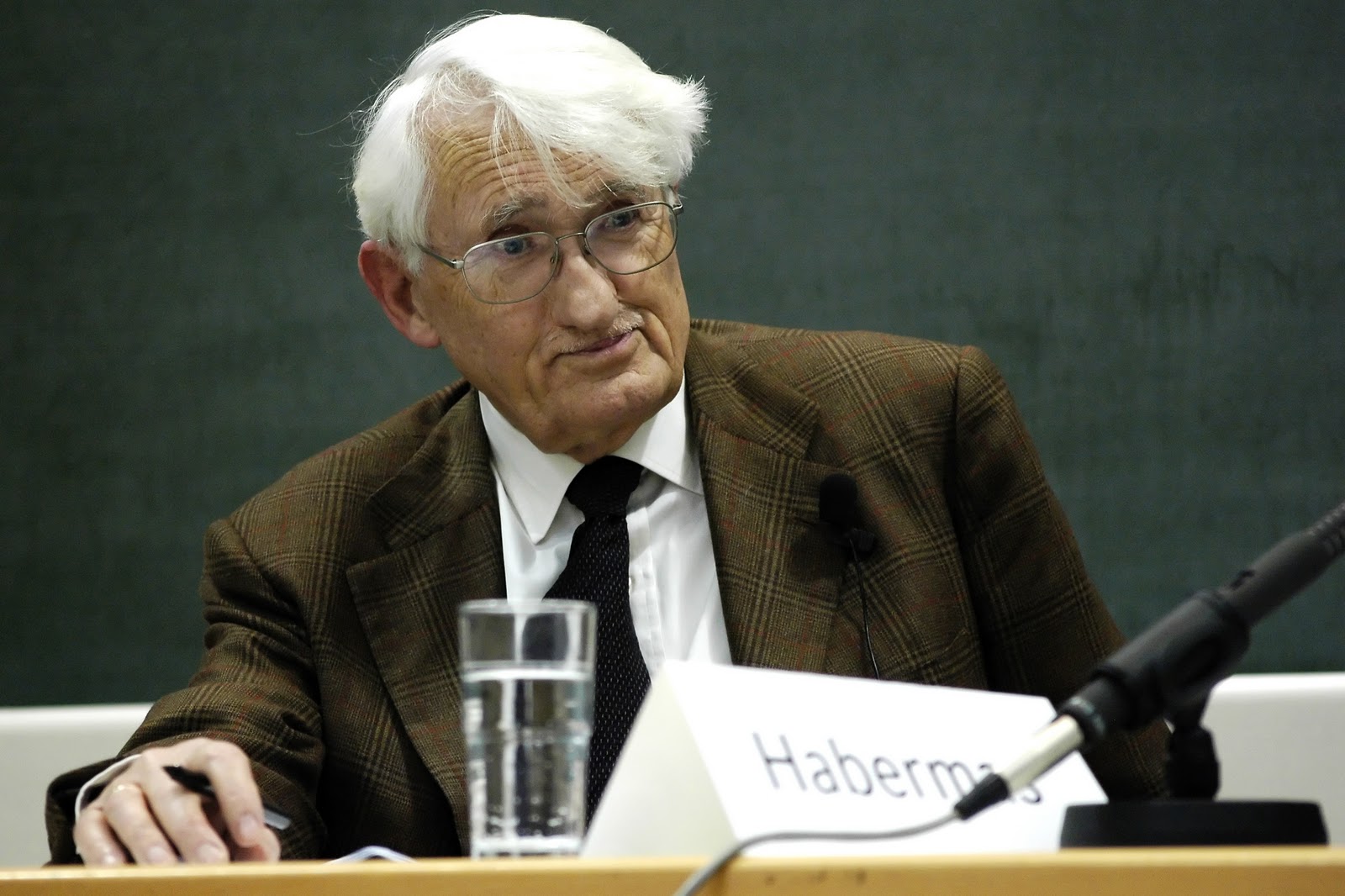
Luke Bretherton skriver om den nya humanismens och ateismens religiösa ambitioner:
The sense in which religion and by implication atheism was simply a
passing stage on the way to a new rationalistic outlook freed from
religious baggage seems to have dissipated. Instead, a new confessional
atheism has emerged, one ready to hawk its wares in the religious
marketplace and compete for the souls of children.
Rather than a critique of religion from which the religious can
learn, we find a "wannabe civil religion" that depends for its appeal on
the continuance of the very thing it claims to replace. It has become
an alternative rather than a critique.
Rather than a prophetic witness, disabusing humans of our illusions
and idolatries, atheism has become Pepsi to the Coke of religion. To
paraphrase the New Testament: what does it profit atheism to gain the
whole world and lose its own soul?
Via I Think I Belive hittade jag ett intressant utdrag från Benedikt XVI tal vid hans besök i den tyska förbundsdagen nyligen. Talet, som är värt att läsa i sin helhet, finns här!
Where positivist reason dominates the field to the
exclusion of all else – and that is broadly the case in our public
mindset – then the classical sources of knowledge for ethics and law are
excluded. This is a dramatic situation which affects everyone, and on
which a public debate is necessary. Indeed, an essential goal of this
address is to issue an urgent invitation to launch one.
The positivist approach to nature and reason, the positivist world
view in general, is a most important dimension of human knowledge and
capacity that we may in no way dispense with. But in and of itself it is
not a sufficient culture corresponding to the full breadth of the human
condition. Where positivist reason considers itself the only sufficient
culture and banishes all other cultural realities to the status of
subcultures, it diminishes man, indeed it threatens his humanity.
I say this with Europe specifically in mind, where there are
concerted efforts to recognise only positivism as a common culture and a
common basis for law-making, so that all the other insights and values
of our culture are reduced to the level of subculture, with the result
that Europe vis-à-vis other world cultures is left in a state of
culturelessness and at the same time extremist and radical movements
emerge to fill the vacuum.
"Edward Gibbon, in chapter 2 of his famous history of the decline of the
Roman Empire, has this to say: “The various modes of worship, which
prevailed in the Roman world, were all considered by the people, as
equally true; by the philosopher, as equally false; and by the
magistrate, as equally useful”. When you cross the philosopher with the
magistrate, you get Habermas.
Misstänker att Berger skulle säga samma sak om Zizek ...
“Today
a Christian group protects
itself often by hiding its particularity, by speaking as the testimony of
all good wills, by identifying itself with positions held in common, by announcing only the insignificant truths
of every man.”*
Nyligen gjorde Humanisternas Christer Sturmark och prästen Annika Borg gemensam sak genom att i en debattartikel i DN hävda att kyrkan och den sekulära humanismen måste gräva ned stridsyxorna och börja samverka. För varför, frågar Sturmark och Borg, skall man dra en gräns mellan personer som tror på en Gud och de som inte gör det, när den väsentliga skiljelinjen går mellan dem som vill se ett samhälle byggt på humanistisk och sekulär grund och dem som inte vill?
Ja, varför skall man dra en gräns mellan kristna och ateister, när de ju egentligen bara vill uppnå samma sak; nämligen ett gott samhälle? Underförstått i detta resonemang är ju att vi alla egentligen är överens om vad som är ett gott samhälle, och om att de kristna bara behöver skrapa av sig sin religiösa fernissa för att komma fram till samma rationella insikt som de neutrala ateisterna.
I den gamla First Things-artikeln "Why We Can't All Just Get Along" sätter Stanley Fish ord på vad som är problemet med Sturmarks och Borgs hållning:
"For the modern liberal, beliefs are what the mind scrutinizes and judges by rational criteria that are themselves hostage to no belief in particular; for Milton, beliefs—in God or in oneself or in the absolute contingency of material circumstances—are the content of a rationality that cannot scrutinize them because it rests on them. Milton's motto is not “seeing is believing,” but “believing is seeing”; and since what you see marks the boundaries of your knowledge, believing is also knowing; and since it is on the basis of what you know—whether what you know is that there is a God or that there isn't one—that you act, believing is acting. What you believe is what you see is what you know is what you do is what you are."
Sturmark menar att Humanisterna genom sin religionskritik spelar en viktig roll som samtalspartner för kyrkan. Men Sturmarks ytliga förståelse av religion parat med hans oreflekterade upplysningstro gör att hans religionskritik inte är värd
namnet. Som Stanley Hauerwas skulle ha suckat: If only we could produce some interesting atheists. Eller som PJ Anders Linder ( @PJSvD ) uttryckte saken på twitter: "På DN Debatt i dag lyckas verkligen Sv Kyrkan och Humanisterna locka fram det sämsta hos varandra". Kanske menade han en identitetslös men behagsjuk kyrka, och en högmodig men obildad ateism, som förenas av att de båda glömt bort sina respektive berättelser?
--
* Michel
de Certeau, “How is Christianity Thinkable Today?”, in Graham Ward (ed), The Postmodern God: A Theological Reader (Oxford:
Blackwell, 1997), p. 291.
"Postmodernity is modernity throwing up its hands in despair in the recognition that reason cannot stand firm without a heavenly anchor."
Min gamla lärare Hans Boersma lägger ut texten kring nominalismens förbannelse och ressourcement-rörelsens välsignelser.
-
"If people don’t think there is some kind of objective good that they
can recognise, that they are trying to discern, then the quest for
authenticity is likely to manifest itself as a quest for power and pure
promotion of self for the sheer sake of self – you know, the world of
iconic pop and rock stars making videos and non-music and the way this
is then discussed with comically-absurd solemnity in The Guardian
as if this were really culturally important."
John Milbank har en del övrigt att önska av kultur- och nöjesjournalister och Zygmunt Bauman.
"Interregnum är tillståndet när en gammal ordning upphört att fungera – men ingen ny finns i sikte. Den gamla, som varat i över hundra år, tog slut samtidigt med Sovjetunionen och kalla kriget, sade Bauman. Fram till dess kuggade ännu Politiken och Makten – ”Power”, i meningen förmågan att uträtta saker – i varandra. Men sedan lösgjorde sig ekonomin från politiken och nästan alla styrmedel upphörde att fungera. Politiken har blivit impotent, eftersom den har förblivit nationell – medan det mesta som påverkar våra liv har blivit globalt."
"För sjuttio år sedan handlade människans fruktan om en samhällsmakt som skulle förslava eller förgöra henne. Det är vad Orwells och Huxleys dystopier handlade om. I dag är det Michel Houellebecq som ger uttryck åt tidens fasa. I ”La Possibilité d’une île” har människor inga band till varandra längre och de förstår inte vad som menas i de få böcker som finns kvar som berättar om kärlek."
Zygmunt Bauman intervjuas av Maciej Zaremba i dagens DN.
There is more than a little merit to Creston Davis's claim that "the portal to theology was opened precisely because capitalism is ultimately a self-enclosed structure, and so theology gives us a way to transcend capital," a way that is "premised on relationality and not on Ego.
Se där en intressant förklaring till orsaken till "religionens nya synlighet" ...
[T]he most ghettoized people of all, I’ve come to learn, are those who don’t know they grew up in a particular time and place and culture, and who think they can get to universal truths outside of particular realities and commitments. There are ghettos and then there are ghettos. The real question is not whether you grow up in a ghetto, but whether the ideas and customs and rhythms of your particular ghetto prepare you to engage other ideas and customs and life experiences without losing touch with your roots.
"If power is essentially government, why does it need glory, that is, the ceremonial and liturgical apparatus that has always accompanied it?"(...) "Agamben shows that, when combined with the idea of providence, this theological-economic paradigm unexpectedly lies at the origin of many of the most important categories of modern politics, from the democratic theory of the division of powers to the strategic doctrine of collateral damage, from the invisible hand of Smith's liberalism to ideas of order and security.
But the greatest novelty to emerge from The Kingdom and the Glory is that modern power is not only government but also glory, and that the ceremonial, liturgical, and acclamatory aspects that we have regarded as vestiges of the past actually constitute the basis of Western power. Through a fascinating analysis of liturgical acclamations and ceremonial symbols of power—the throne, the crown, purple cloth, the Fasces, and more—Agamben develops an original genealogy that illuminates the startling function of consent and of the media in modern democracies."
... eller med Paul W. Kahns ord: "the state is not the secular arrangement that it purports to be"!
John Milbank skriver intressant om både orsaken till, och politikens sätt att bemöta, kravallerna:
While if they suppose that the there is no moral, as opposed to pragmatic, reason for keeping the law - given the fundamental value of self-interest - then this is surely a conclusion that they share in contemporary England with many wealthy financiers, journalists, senior policeman and holders of government office, as the News International scandal exposed.
(...)
Here one might venture the remark that while religious people tend to see that malefactors and sinners are most of all to be pitied, secular political positions are bifurcated between a rightist and neo-pagan pure condemnation, and a leftist scientistic patronising of the wrong-doer as a sub-personal ineffective cog in a wonky machine.
En hemlös man misshandlades nyligen till döds av fem poliser i Orange County, Kalifornien. Enligt NY Times har FBI nu inlett en undersökning för att utreda om mannens medborgerliga rättigheter har kränkts. Denna absurda detalj fick mig att tänka på en fantastisk föreläsning om språk med Stanley Hauerwas jag nyligen lyssnade på:
I have no difficulty with rights claims that express social and legal duties. But claims of human rights as human rights involves philosophical difficulties that can not be resolved. In particular questions about what kind of human beings we need to be to have rights is very troubling in relationship to the mentally handicapped. Moreover once rights language is legitimized in the abstract, rights seems to multiply faster than rabbits . My deepest worry about rights however is how the language of rights can eviscerate more determinative moral descriptions. (...)
If you think rights are more basic than the description murder, you have an indication that the language has gone on holiday.
Inspirerad av Wittgenstein sätter Hauerwas som så ofta fingret på frågan om vilken berättelse och vilket språk som formar vår verklighet. Är det berättelsen om ett föreställt socialt kontrakt som ger individer vissa rättigheter? Eller är det berättelsen om hur Guds kärlek och nåd omfattar alla människor?
Hauerwas drar det till sin spets: "You can only act in a world you can see, and the only way you learn to see is by learning to say".
Under en joggingtur, kort efter att jag anlänt till San Francisco, fann jag mig efter ett par kilometers löpning utmed det centrala shoppingstråket helt plötsligt som förflyttad till ett avsnitt av The Wire. I San Francisco gränsar nämligen det ökända området Tenderloin till shoppingdistriktet med de stora varuhusen på Market street. Bara några kvarter från de exklusiva modehusens butiker drar de hemlösa runt på sina kundvagnar och de psykiskt sjuka irrar omkring på gatorna. Här ligger crackpundarna utslagna på trottoarerna, och langningen sker öppet i varje gathörn.
Som svensk förfäras och förundras man över hur det mitt i hjärtat av en västerländsk storstad kan finnas en sådan misär. Svenskar förknippar kanske främst socialt utsatta områden med förorter. Amerikanen uppfattar dock ”suburb” som ett högstatus-begrepp förknippat med tjusiga men identiska villaområden. Här är det i innerstaden som fattigdomen liksom brottsligheten är störst.
Tenderloin var en gång ett vackert område med påkostade fasader. Husen tilläts dock att förfalla då det ansågs för dyrt att renovera dem. På grund av sin vackra arkitektur tilläts dock inte husen att rivas. Vidare består Tenderloins hyreshus nästan enbart av enrummare med delat badrum och kök, så kallade Singel Room Occupancy, SRO´s. Givet att husen är i uselt skick och att de är SROs är hyran billig. Att Tenderloin inte omvandlats till turistvänligt shoppingdistrikt beror dock på mer än dess arkitektur. Det beror även på en medveten politisk strategi att ta hand om stadens många hemlösa. Initiativet som kallades ”Care Not Cash”, gick ut på att betala frivilligorganisationer för att driva SROs som boenden för hemlösa. Istället för att som tidigare få 395 dollar i månaden, innebar Care Not Cash att socialbidragstagaren bara fick 59 dollar fast med mat och boende i något av dessa SROs inkluderat. Detta delvis för att säkerställa att pengarna inte spenderades på alkohol och droger.
Trots att Tenderloin av många betraktas som ett fult sår i San Franciscos stadsbild finns det en stark rörelse för att bevara områdets möjligheter till billigt boende. Något skämtsamt skulle det ur detta perspektiv vara ett dråpslag för de fattiga om konstnärer och homosexuella började bosätta sig i området. I alla fall om man får tro Richard Floridas Bohemian Gay index (se There goes the Neighborhood: How and Why Bohemians, Artists and Gays Effect Regional Housing Values).
Sannolikt kommer tillståndet i den amerikanska ekonomin avgöra takten på Tenderloins gentrifiering. För som Per Wirtén skriver i en krönika: "I ett land utan egentliga skyddsnät kommer även stadsmiljöerna snart påverkas. En hel ideologi om staden och "det urbana" faller samman med medelklassen." Själv hoppas jag att Tenderloin även fortsättningsvis skall vara en plats där fattiga har råd att bo, och att andra vägar än gentrifiering skall leda till att boendemiljön förbättras. För som David Harvey påpekat: "Ingen vill vara pittoresk kuliss till den kreativa klassen".
"The serious claim of political theology today, however, is not that the secular should yield to the church - whatever church that might be - but rather that the state is not the secular arrangement that it purports to be. A political life is not a life stripped of faith and the experience of the sacred, regardless of what we may believe about the legal separation of church and state."
"... essential to our learning to act is that we learn to behave in a way that others can construe our actions as intelligible. In other words, the intelligibility of an action depends on the narrative continuities in an agent's life. Yet the ability to narrate my life depends on having narratives available that make my peculiar life fit within narratives of a community that direct me toward an end that is not of my own making. The intelligibility of my life, therefore, depends on the stock of descriptions at a particular time, place, and culture. I am, at best, no more than a co-author of my life."
Stanley Hauerwas redogör för Alasdair MacIntyres syn på handlande i en gammal artikel i First Things.
Den brittiska tankesmedjan Ipsos MORI publicerade nyligen opinionsundersökningen How much does religion matter?, som visar på en rad intressanta attityder. Bland annat uppgav endast 41% av de svenskar som i undersökningen bekände sig som troende att religion spelar en viktig roll i deras liv. Detta kan jämföras med att 100% av de tillfrågade i Saudiarabien menade att religion spelar en viktig roll i deras liv. Kristna i västvärlden tycks överlag tillmäta religion mindre betydelse än vad muslimer gör i undersökningen. På frågan "How important, if at all, is your faith or your religion in your life?", svarade 94% av muslimerna att den var viktig, medan bara 66% av de tillfrågade kristna i väst hade samma uppfattning. Undersökningen säger alltså något mer än det självklara att religion spelar en mindre roll i människors liv i sekulariserade länder, utan alltså mer intressant att även den troende minoriteten i dessa länder tillmäter sin religion mindre betydelse i sina liv.
Den amerikanske religionshistorikern Bruce Lincoln använder sig av idealtyperna ”maximalister” och ”minimalister” för att beskriva två olika synsätt avseende de religiösas förhållande till det sekulära. ”Maximalisterna” ser religion som genomsyrande hela tillvaron, medan "minimalisterna" menar att religion bör hänskjutas till avgränsade sfärer, vanligen den liberala synen att religion är en privatsak. Via bloggen The Religion Beat hittade jag en mycket läsvärd intervju med Craig Martin om hans bok Masking Hegemony: A Genealogy of Liberalism, Religion and the Private Sphere där han bland annat kommenterar Lincolns teorier.
Despite contemporary Evangelicals’ insistence that one should not be a Christian only on Sunday morning, most Christians are, in a manner of speaking. Groups like the Amish, whose members’ lives are dominantly ordered, legitimated, and maintained through their form of Christianity, are a rarity today. Subjects whose lives are ordered by capitalism think such groups quaint or extremist, as Lincoln rightly suggests. Any group that would demand that adherents actually adhere to habitus at odds with western consumerism is almost by definition “fanatical” (if one’s religious tradition requires one to move into shared living space, it’s probably a “cult”). By contrast, religious groups that make few if any demands on members’ lives—or at least demands that might conflict or chafe against late capitalism and its consumer culture—have grown in popularity. According to Terry Eagleton—in a discussion of the rise of the popularity of atheism—more and more people are paying attention to religion, “even in England, where religion is in general a rather moderate, discrete, slightly shamefaced affair—and … where people are likely to believe that when religion starts interfering with your everyday life that it’s time to give it up. In that sense it resembles alcohol, I suppose.” As long as one can hold a job and remain a consumer—thereby responsibly contributing to the economy—religion and alcohol are acceptable; once they begin interrupting one’s responsible contributions to the economy, that is when people start to raise eyebrows.[“The God Debate,” part of the Gifford Lecture series at the University of Edinburgh] As capitalism has replaced Christianity’s hegemonic position, most contemporary American Christians spend more time in shopping malls than in church, more time watching commercials than reading the Bible.
Om Craig Martin har rätt är det kanske inte så konstigt att många kristna inte tillmäter sin tro någon större betydelse.
I en intressant debattartikel på Newsmill fortsätter diskussionen som DN startade under rubriken Religionsboom?, och där Marie Demker och PC Jersild debatterade religion och politik. Jimmy Emanuelsson driver hem poängen att vi faktiskt inte vet vad som avses med religion:
"Intressant nog är just religion förstått som "tro" en huvudingrediens i den ekumeniska liberalteologins strävanden efter att förklara religion som något allmänmänskligt. Men att primärt förstå religion som "tro" har inte visat sig varken speciellt generaliserbart, eller analytiskt fruktbart (utom möjligen i en luthersk-protestantisk kontext). Jersild verkar väldigt mån om att vakta gränserna mellan politik och religion, men skälen för detta är märkliga. Han menar att skiljelinjen är viktig då det sitter ett parti i regeringen med bakgrund i frikyrkorna - men kan inte visa på vilket sätt partiet underlåter att respektera de spelregler som finns i politiken idag. Det verkar snarast som att Jersild vill misstänkliggöra politiska aktörer enbart med hänvisning till att de betecknas som religiösa. Det framstår för mig som ett alltför godtyckligt och snävt sätt att sortera ut vad som kan tänkas vara politiskt relevant."
Jag misstänker att Demker har mycket lite att invända mot Emanuelssons resonemang, och att PC Jersild är den som egentligen står i skottlinjen för artikeln. Det är problematiskt att kritisera en term som de flesta tror sig veta vad den innebär, men i själva verket har ganska vaga föreställningar om. Det blir följaktligen nära nog omöjligt att diskutera religion kontra politik då man egentligen inte vet vad som avses med religion, men ändå tror sig kunna särskilja den från politik. William Cavanaugh uttrycker problematiken med att definiera religion väl:
"Describing how flustered his students become when he asks them to write a definition of “religion,” Kimball asserts “Clearly these bright students know what religion is”; they just have trouble defining it. After all, Kimball assures us, “Religion is a central feature of human life. We all see many indications of it every day, and we all know it when we see it.” When an academic says such a thing, you should react as you would when a used car salesman says “Everybody knows this is a good car.” The fact is that we don’t all know it when we see it. A survey of religious studies literature finds totems, witchcraft, the rights of man, Marxism, liberalism, Japanese tea ceremonies, nationalism, sports, free market ideology, and a host of other institutions and practices treated under the rubric “religion.” If one tries to limit the definition of religion to belief in God or gods, then certain belief systems that are usually called “religions” are eliminated, such as Theravada Buddhism and Confucianism. If the definition is expanded to include such belief systems, then all sorts of practices, including many that are usually labeled “secular,” fall under the definition of religion. Many institutions and ideologies that do not explicitly refer to God or gods function in the same way as those that do. The case for nationalism as a religion, for example, has been made repeatedly from Carlton Hayes’ 1960 classic Nationalism: A Religion to more recent works by Peter van der Veer, Talal Asad, Carolyn Marvin, and others. Carolyn Marvin argues that “nationalism is the most powerful religion in the United States.”
Själv önskar jag att begreppet religion övergavs, kanske till förmån för livsåskådning eller någon annan term som inte mörkade det faktum att vi alla håller oss med föreställningar om tillvaron som vilar på icke bevisbara antaganden.
"All understanding of reality involves a commitment, a venture of faith. No belief system can be faulted by the fact that it rests on unproved assumptions; what can and must be faulted is the blindness of its proponents to the fact that this is so." - Lesslie Newbigin